The quick version:
- Your floor plan isn’t just a drawing—it’s the blueprint for how you’ll live every single day
- The right layout makes mornings calmer, entertaining effortless, and ensures your home grows with you
- In Mandurah, where canal views often face the harsh western sun, getting orientation right from the start is everything
- A custom floor plan designed around your lifestyle (not a template tweaked to fit your block) is the difference between a house and a home that truly works
Here’s something most people don’t realise until they’ve lived in their home for six months: the floor plan you choose will shape every morning routine, every dinner party, and every quiet Sunday afternoon for decades to come.
It’s not about bedroom counts or square metres on paper. It’s about whether you can supervise the kids while cooking dinner. Whether your guests naturally flow from the kitchen to the alfresco without awkward bottlenecks. Whether you’ll have a peaceful spot to read when the house is buzzing with activity.
For those building in Mandurah and the Peel Region, there’s an added layer of complexity. Our coastal lifestyle is the envy of Australia—but capturing it requires more than slapping a standard floor plan onto your block. The interplay between canal views, the famous Fremantle Doctor sea breeze, and that relentless western afternoon sun demands a thoughtful, site-specific approach.
This guide distils over 16 years of local building experience into a practical framework for choosing a floor plan that genuinely fits your life—not just today, but for the long haul.
Start with how you actually live (Not how you think you should)
Before you even glance at a floor plan, grab a coffee and honestly map out your typical week. Not your idealised version—your real one.
Think about your morning choreography. Does everyone leave at different times, or is it a mad rush at 7:30 am? If your partner needs to sleep in while you’re getting the kids ready, a master suite near the garage means less disruption. If sand and school bags are the constant enemy (welcome to coastal WA), a proper mudroom off the garage entry becomes non-negotiable—not a luxury.
Working from home has changed the game entirely. That spare room you once earmarked as a ‘study nook’ now needs proper acoustic separation, good natural light, and—if you’re taking video calls—a background that doesn’t scream ‘I’m working from my kid’s playroom.’ Position matters too: an office near the front entry works beautifully for clients visiting, while one buried behind the kitchen becomes a fishbowl of family noise.
And what about evenings? If half the family wants to watch a movie while the other half reads in peace, that open-plan dream can quickly become an acoustic nightmare. This is where thoughtful zoning—or what designers call ‘broken plan’ living—comes into its own.
Your entertaining style should drive your kitchen placement

Mandurah’s lifestyle is built around hospitality. But ‘entertaining’ means something completely different depending on who you ask—and your floor plan needs to match your actual hosting style.
The casual connector
If your idea of a great Saturday involves friends congregating around the kitchen island with wine while you cook, the benefits of open-plan living are made for you. You want the kitchen, dining, and alfresco to merge into one generous space—ideally with a massive island bench (3 metres or longer isn’t excessive) where the barrier between host and guest dissolves entirely. Your furniture layouts should encourage conversation, not create obstacles.
The formal host
Prefer elegant dinner parties where you appear relaxed and present, not frazzled and covered in sauce? A scullery or butler’s pantry changes everything. This hidden second kitchen allows you to stage courses, hide prep chaos, and keep the main kitchen island pristine for guests to admire.
The outdoor enthusiast
For those who essentially live outside, the transition from indoors to alfresco is paramount. Your floor plan needs to account for wind protection (bi-fold doors and windows that can shield against that South-West breeze), proximity to the pool and BBQ area, and critically, a ‘wet flow’—can swimmers access a bathroom without dripping through the main living room?
For more inspiration on how these spaces can flow together, explore these open-plan living ideas.
Think 15 years ahead

A custom home is a long-term investment. One of the most common regrets we hear is designing strictly for the present stage of life without considering what’s around the corner.
Young families
Proximity is everything. A nursery close to the master suite saves countless midnight walks. Open sightlines from the kitchen to play areas mean you can cook dinner without constantly wondering what’s happening in the other room. And bathtubs—don’t let anyone talk you out of them when you have little ones.
The teenage years
Suddenly, separation becomes the priority. A ‘children’s wing’ with its own activity room and bathroom allows teenagers independence (and keeps their mess contained). Solid core doors—not hollow—provide genuine sound separation between their music and your sanity.
Empty nesters
As children leave, a well-zoned home doesn’t feel empty—it feels manageable. You can effectively ‘shut down’ the guest wing, living primarily in the main suite and living areas, reducing cleaning and heating costs dramatically.
Multi-generational living
With the rising cost of living, more Australian families are accommodating elderly parents or adult children. A guest suite on the ground floor with a private ensuite (and perhaps a small kitchenette) creates a ‘home within a home’—offering dignity and privacy for everyone. This is explored in detail in the guide to elements of the best family home designs.
Open-plan isn’t always the answer

Australians love open-plan living, and for good reason—the flow, the light, the connection. But let’s be honest: it has downsides. Sound travels unimpeded. Temperature control becomes challenging. Kitchen mess remains perpetually on display.
‘Broken plan’ design is the sophisticated evolution. Rather than walls or no walls, it employs strategic architectural elements: split levels creating distinct zones, half-walls providing acoustic separation while maintaining connection, internal glazing with steel-framed doors and windows that can open or close as needed, and timber battens or screens allowing light flow while defining spaces.
The result? You maintain that valuable sense of space and light while gaining the flexibility to close off areas when you need quiet, privacy, or simply to hide the dinner dishes.
Single storey or double?

This is one of the first major decisions, and it’s often driven by your block’s characteristics as much as personal preference.
Single-storey homes offer ease of movement, simpler construction, and often better energy efficiency with fewer walls to insulate. They’re ideal for those planning to age in place, families with young children, or anyone who simply doesn’t want to deal with stairs.
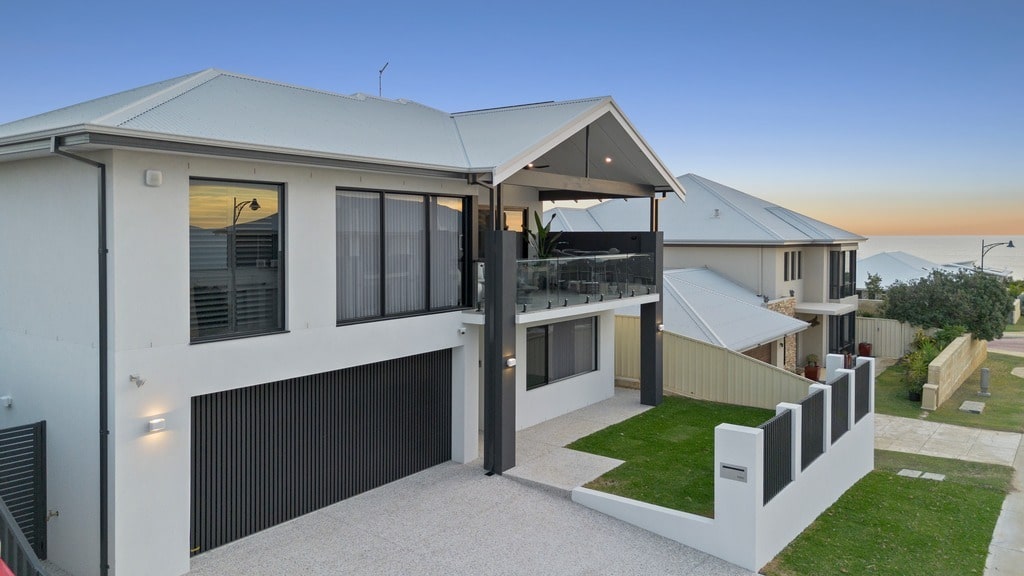
Double-storey designs shine on narrower blocks or when you want to maximise views. By building up rather than out, you preserve outdoor space while gaining separation between living and sleeping areas. In coastal Mandurah, an ‘upside-down’ layout—with living areas upstairs—can capture water views that a single-storey simply couldn’t access.
There’s a comprehensive comparison available in this double-storey versus single-storey home designs guide, and for those working with challenging lot dimensions, these narrow block design tips offer practical solutions.
Orientation in Mandurah
Here’s where building in Western Australia gets genuinely interesting—and where generic floor plans from eastern states fall apart.
The golden rule of North-facing living
At Mandurah’s latitude (32°S), the sun angles vary dramatically across seasons. In winter, when we actually want warmth, the sun sits low at around 34.5 degrees at noon—perfect for flooding north-facing living areas with natural heat through properly sized windows. In summer, it climbs to 81.5 degrees, nearly overhead, meaning standard eaves (450-600mm) act as a natural visor, blocking direct sun while keeping interiors cool.
This is why experienced WA designers orient main living areas to within 15-20 degrees of true north. It’s passive solar design at its most elegant—free heating in winter, natural cooling in summer.
The Western sun problem
West-facing walls absorb punishing late-afternoon heat. Because the sun is low in the sky by then, standard horizontal eaves don’t help—the sun simply slides underneath. In a smart floor plan, west-facing walls host garages, bathrooms, or utility rooms as buffers. If you must have western doors and windows (for views, perhaps), invest in high-performance glazing, deep verandas of 3-4 metres, or automated external louvre blinds.
The canal block dilemma
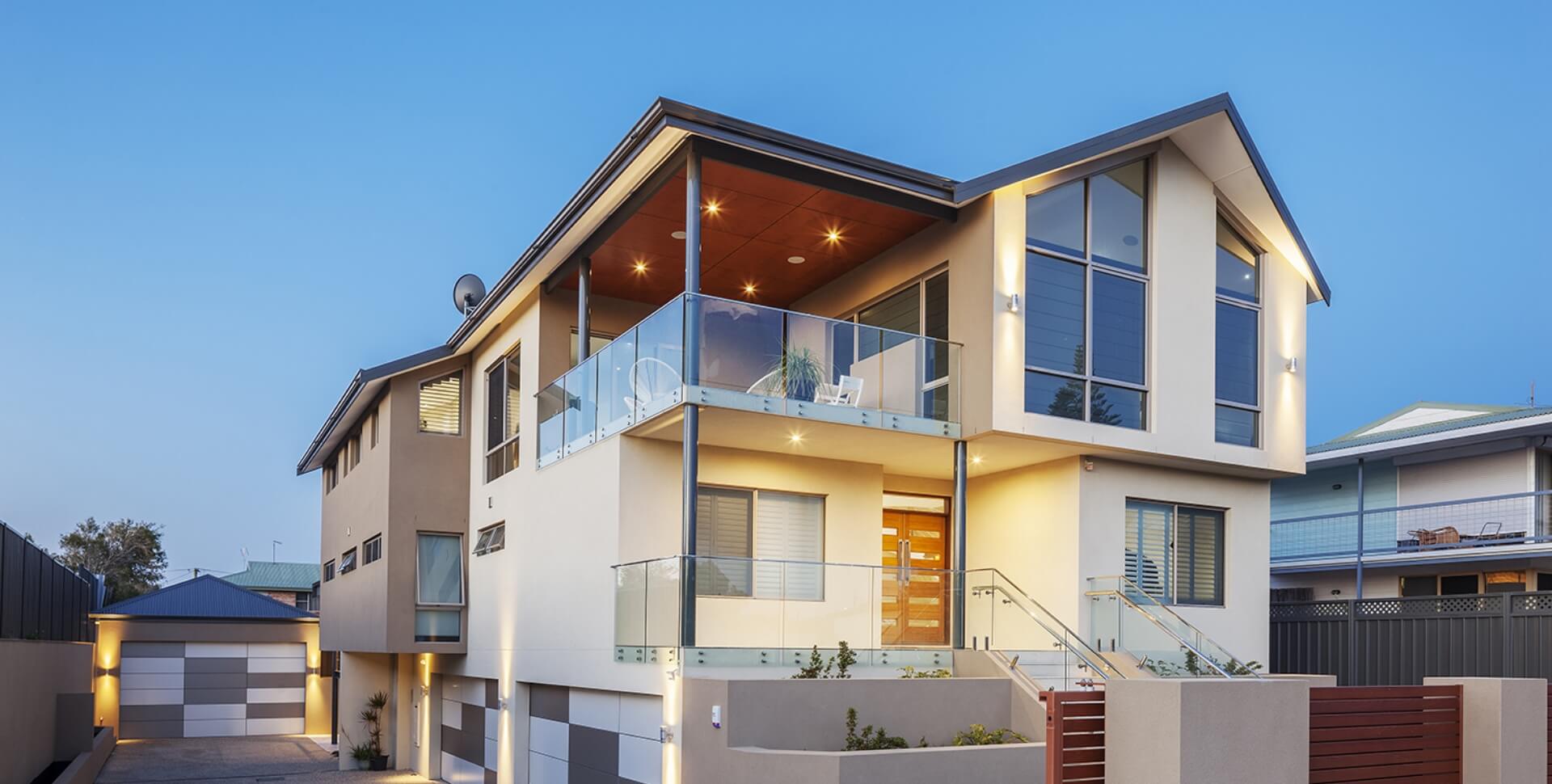
Mandurah’s extensive canal network creates a uniquely WA challenge. Many prestigious blocks face water to the west—meaning your sunset views coincide with the most problematic sun exposure. If you simply glass up the western elevation for those water views, you’ll bake in summer.
A skilled designer resolves this tension through clever strategies: clerestory windows that bring northern light from above while living areas face the view; angled floor plans that capture both north sun and west views; or creating a dedicated ‘sunset room’ or alfresco specifically oriented to evening views, separate from the main living.
You can see how these challenges have been navigated in waterfront builds like Cormorant Key and Seawind Drive.
Designing for the Fremantle doctor

The famous Fremantle Doctor—that cooling afternoon sea breeze—is one of the best things about a Mandurah summer. It typically arrives between late morning and early afternoon from October to March, initially from the west-southwest before shifting to southwest or south by evening. Wind speeds reach 15-20 knots with noticeable cooling.
A floor plan optimised for the breeze positions alfresco areas to the southwest or south of living spaces, creating natural wind pathways through the house. Windows and doors on the southwest act as inlets, with openings on the north and northeast allowing warm air to escape. Bi-fold doors and large sliding doors oriented toward the breeze maximise this effect.
On days without the Doctor, temperatures can exceed 40°C. This breeze-responsive design isn’t just pleasant—it’s essential.
Why future-proofing matters
Here’s a statistic that should influence every floor plan decision: 87% of Australians aged 65+ want to remain in their homes as they age, yet retrofitting accessibility features costs roughly 22 times more than incorporating them during construction. The NCC 2022 now mandates basics—step-free entrance paths, wider doorways (820mm), hobless showers—but luxury homes should exceed these minimums with 1,200mm corridors, lever handles, and ground-floor master suite options.
This is precisely where template floor plans fall short. Project builders design for the average family on the average flat block—not Mandurah’s canal blocks with westward water views, sloping estuary sites, or coastal setback requirements. Putting a project home on these sites often means compromising setbacks, missing views because pre-set window locations don’t align with the water, or fighting orientation issues the design never anticipated.
A custom floor plan maximises every square metre of expensive waterfront land and navigates complex geometries that standard plans can’t handle. It also allows flexibility during construction—because sometimes you can’t truly understand a view or space until the frames are up.
Why template floor plans often fail in Mandurah
Project builders offer catalogues of pre-set floor plans. They’re efficient and cost-effective for standard blocks in standard suburbs. But here’s the reality: they’re designed for the average family on the average flat rectangular block.
Mandurah isn’t average. Canal blocks with waterfront views to the west. Sloping sites around the estuary. Coastal conditions require specific materials. Local planning policies with canal setback requirements. Putting a project home on these sites often means compromising on setbacks, missing the view because pre-set window locations don’t align with the water, or fighting orientation issues the original design never anticipated.
A custom floor plan is drawn from scratch for your specific block. It maximises every square metre of expensive waterfront land. It navigates complex geometries that standard plans simply can’t handle. And crucially, it allows flexibility during construction—because sometimes you can’t truly understand a view or a space until the frames are up.
Key layout features worth fighting for
Beyond the broad strokes, certain interior design details separate good floor plans from great ones:
- The Scullery Decision: A walk-in pantry offers dry storage with minimal bench space. A butler’s pantry adds prep bench, sink, and staging—perfect for hiding meal preparation during dinner parties. A full scullery functions as a complete second kitchen, ideal for serious entertainers who want the mess entirely hidden.
- Storage That Actually Works: Under-stair storage, built-in cabinetry, and dedicated mudrooms aren’t glamorous—but they separate organised homes from cluttered ones. A proper mudroom off the garage, integrated with the laundry, contains coastal mess before it enters your sanctuary.
- The Master Suite as Retreat: Position away from children’s bedrooms and street noise. The ensuite should feel spa-like—freestanding baths, double rain showers, and ‘wet room’ configurations are current trends. Your walk-in robe doubles as a sound buffer while maximising storage.
- Thoughtful Furniture Layouts: Consider how your existing pieces will sit in each space. A living room that looks generous on paper can feel cramped if it can’t accommodate your preferred sofa configuration without blocking traffic flow.
How Makin Homes can help you get this right

At Makin Homes, we deliberately build a maximum of 10 homes per year—a choice that ensures every project receives the attention it deserves. Our eight-step design process begins with understanding how you actually live: your daily routines, entertaining style, and honest projections about your family’s trajectory over the next decade. Only then do we consider the site—its orientation, views, breezes, slopes, and local planning requirements. The floor plan emerges from this intersection of lifestyle and site, which is why we’ve never built the same home twice.
We also maintain flexibility throughout construction, accommodating those decisions best made standing in the physical frame of your home without penalising you with variation fees. If you’re ready to design a floor plan that genuinely fits your life, book a consultation with our team to discuss your site, your lifestyle, and how we can bring them together.
Frequently asked questions
Can I use a floor plan I found online for my custom home?
You can certainly use it as inspiration, but rarely as a final plan. Online floor plans don’t account for your specific block’s orientation, Mandurah’s unique wind conditions, or local council regulations (R-Codes). A custom builder will take the concepts you like and adapt them to work legally and functionally on your site.
How do I know if a floor plan is genuinely ‘future-proof’?
Look for Universal Design features: at least one full bathroom on the ground floor, hallways at 1,200mm width (not the minimum 1,000mm), rooms that can easily convert from playroom to study to guest bedroom, and step-free access from the street to the main entrance.
Is open-plan living always the best choice?
Not always. While popular, open-plan can be noisy and hard to heat and cool efficiently. The modern luxury trend is ‘broken plan’—using wide sliding doors, changes in floor level, or double-sided fireplaces to maintain visual flow while allowing acoustic separation when needed.
What if my block faces the ‘wrong’ direction for solar access?
This is common in Mandurah, particularly with canal blocks facing west. A skilled designer can ‘cheat’ the light through strategies like clerestory windows (high-level windows facing north while main rooms face the view), central courtyards that bring northern light into the rear of the home, or articulated floor plans that angle different zones toward optimal orientations.
Why is flexibility during construction so important?
Most project builders lock you into a contract where changing a window location or opening up a wall costs a fortune in variation penalties. Custom builders understand that some decisions are best made when you can stand in the physical frame of your home and see how the light falls, where the view actually sits, and how the proportions feel.