The quick version:
- Salt air corrodes standard building materials within months, not years. Your material specification on the coast isn’t an upgrade; it’s the baseline.
- Mandurah’s canal blocks force a genuine design tension between capturing western water views and managing the harshest sun exposure in the state.
- Sandy coastal soils are generally stable for building, but canal-adjacent sites with high water tables often need specialised foundation engineering.
- The Fremantle Doctor sea breeze is one of the best natural cooling systems in Australia, but only if your floor plan is designed to catch it.
- Coastal homes cost more to build and maintain than inland equivalents, though Mandurah’s waterfront property market has consistently outperformed broader averages.
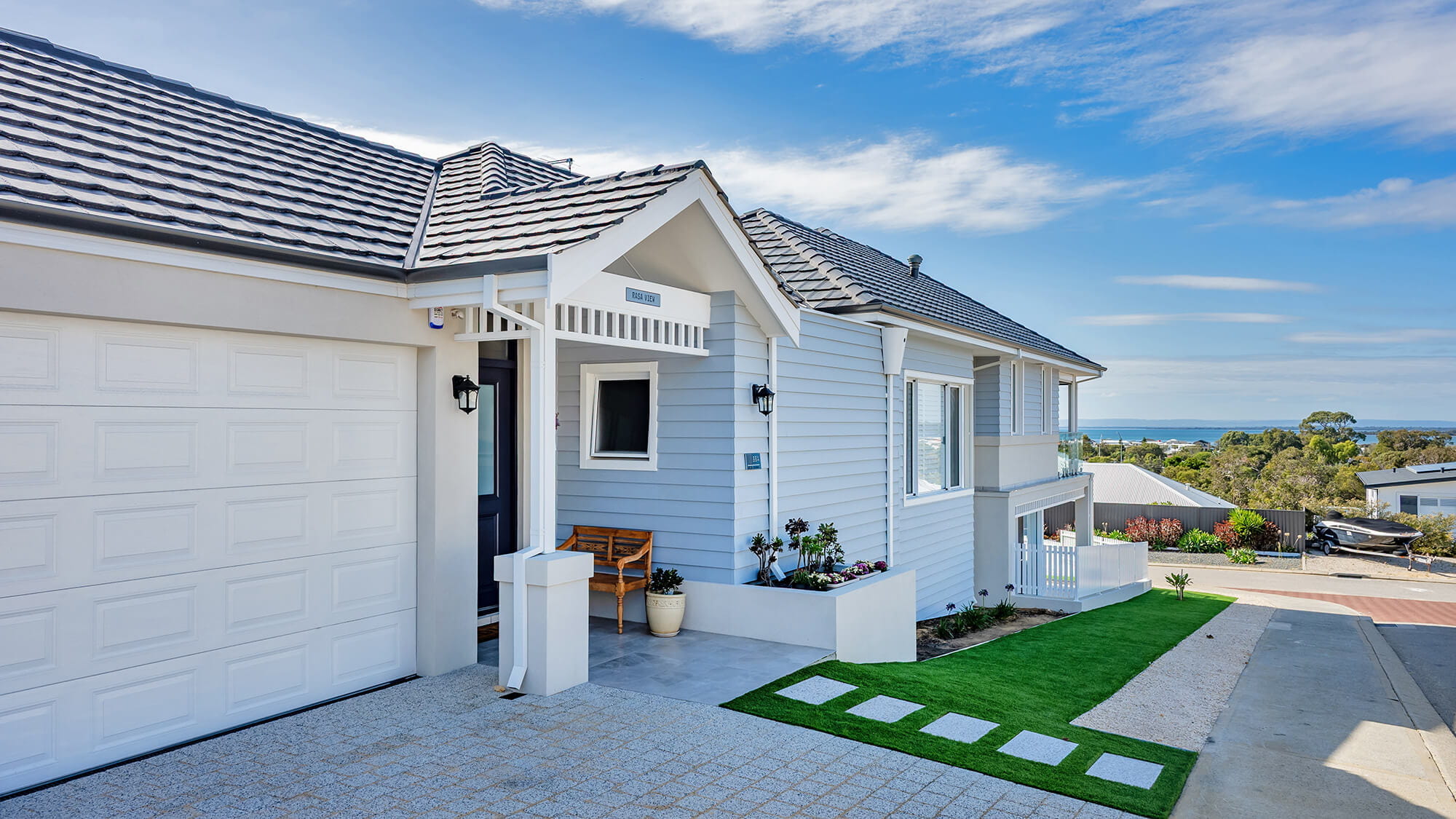
You’ve found the block. Maybe it’s a canal lot in Port Mandurah with water that catches the last pink light of a summer evening. Maybe it’s beachside in Halls Head, close enough to hear the surf from the front door. The lifestyle makes sense immediately. What takes longer to understand is what that salt-laden air, the sand beneath the surface, and the relentless western sun will demand from the home you build on it.
Building a coastal home in Mandurah isn’t the same proposition as building 30 kilometres inland. The coast is generous with its rewards, but it punishes lazy construction. Salt spray attacks metal fittings before the first anniversary. Concrete slabs need engineering that would be overkill in the eastern suburbs of Perth. A poorly oriented living room with big western glass can hit oven temperatures by 3pm in January, right when you’re supposed to be enjoying the view.
None of this is a reason to hesitate. People build extraordinary homes on this coastline every year, and the challenges are entirely manageable with the right knowledge and the right builder. But managing them starts with understanding what building in coastal environments actually involves, beyond the glossy renders and the marketing brochures.
What’s actually going on with the ground beneath you?
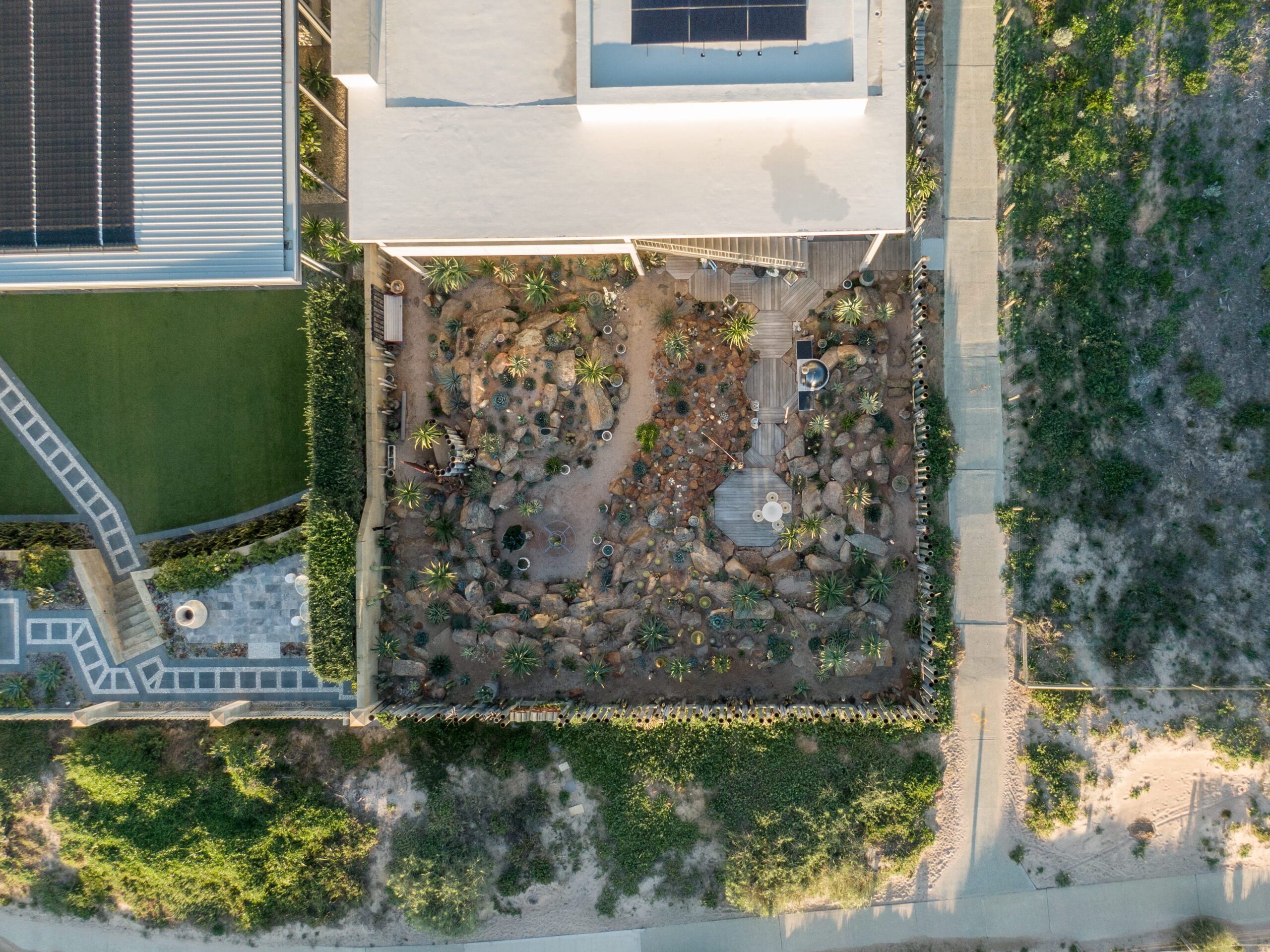
Mandurah sits on the Swan Coastal Plain at the edge of the Peel-Harvey Estuary, one of the largest estuarine systems in south-western Australia. That geography creates conditions you won’t encounter in Perth’s northern corridor or in the display villages out east.
Coastal Mandurah’s ground is predominantly sand from the Quindalup Dunes system closest to the water and Spearwood Dunes further inland, with Tamala Limestone underneath at varying depths. Under Australian Standard AS 2870, most of these sandy sites classify as Class A. That’s actually good news. Sand doesn’t swell and shrink with moisture the way reactive clay does in suburbs like Byford or Armadale, so standard raft slab foundations perform well and settlement risk is low.
Canal blocks tell a different story. Sites next to waterways frequently trigger a Class P (problem site) classification under the same standard, and the reasons pile up fast: fill material used during the original canal estate development, water tables sitting as shallow as half a metre below surface level, and loose saturated sands that can cut bearing capacity in half. A Class P classification means a full geotechnical investigation, not just the standard soil test, and often calls for engineered foundations like screw piles or bored piles rather than a conventional slab.
If you’re weighing up whether to build new or renovate in this area, understanding what sits beneath the block is the first real decision point, well before floor plans enter the conversation.
Salt air destroys standard materials (Here’s what actually works)
Homes within one kilometre of breaking surf, or within 100 metres of calmer waterways like Mandurah’s canals, sit in what building codes call a ‘severe marine environment.’ In practical terms, this means the air around your home carries microscopic salt particles that settle on every exposed surface, attract moisture through a process called hygroscopic action, and create concentrated saline solutions that eat through metals, mortar, and finishes at a rate that surprises most first-time coastal builders.
When you’re building in coastal environments, every material specification has to account for this aggression.
Mortar and metalwork
Under AS 3700, the Australian masonry standard, homes in severe marine zones require M4 class mortar, the highest durability rating available. M4 is engineered specifically to resist salt crystallisation within mortar joints. Standard M3 mortar, which performs perfectly well in most suburban builds, will crumble within years on the coast as salt works its way into the joint and forces the material apart from inside.
External hardware is equally critical. Balustrades, fasteners, door tracks, and hinges all need to be grade 316 stainless steel. The molybdenum in the 316 alloy resists the pitting corrosion that destroys cheaper 304 stainless and galvanised fittings in salt-laden air. The cost difference is real. So is the cost of replacing corroded hardware every few years when you try to save on the initial specification.
Roofing and cladding thresholds
Roofing specifications shift depending on how close you are to the water. According to BlueScope’s coastal exposure guidelines, standard Colorbond steel is acceptable beyond 200 metres from breaking surf. Between 100 and 200 metres, Colorbond Ultra, with its heavier metallic coating mass, becomes the minimum. For homes directly on the foreshore within 100 metres of surf, only SUPERDURA Stainless steel carries the appropriate rating.
What catches most people off guard is that cladding and walling have stricter thresholds than roofing. Standard Colorbond wall cladding needs a full 800 metres of clearance from surf, while Ultra needs 500 metres. If your coastal block sits anywhere within those distances, the specification isn’t optional.
What ‘concrete cancer’ means for your slab
‘Concrete cancer’ is the colloquial term for chloride-induced reinforcement corrosion, and it’s a genuine risk when building in coastal environments. Over time, airborne salt penetrates the microscopic pores in concrete and reaches the steel reinforcement bars embedded inside. Once chloride concentration exceeds a critical threshold, the steel’s protective oxide layer breaks down and corrosion begins. Rust products expand to several times the volume of the original steel, cracking the concrete from within and, left unmanaged, compromising the structural integrity of the home.
Prevention starts at the design stage. AS 3600, the concrete structures standard, classifies coastal properties within one kilometre of surf as B2 exposure, requiring minimum 40 MPa concrete strength with 40 to 50mm of cover over the reinforcement. Supplementary cementitious materials like fly ash or slag, blended into the mix at 20 to 30 per cent replacement, slow chloride ingress considerably. High-quality waterproofing membranes add another layer of defence. None of this is exotic or experimental. It’s standard practice for builders who regularly work the coastline.
Why your floor plan matters more on the coast
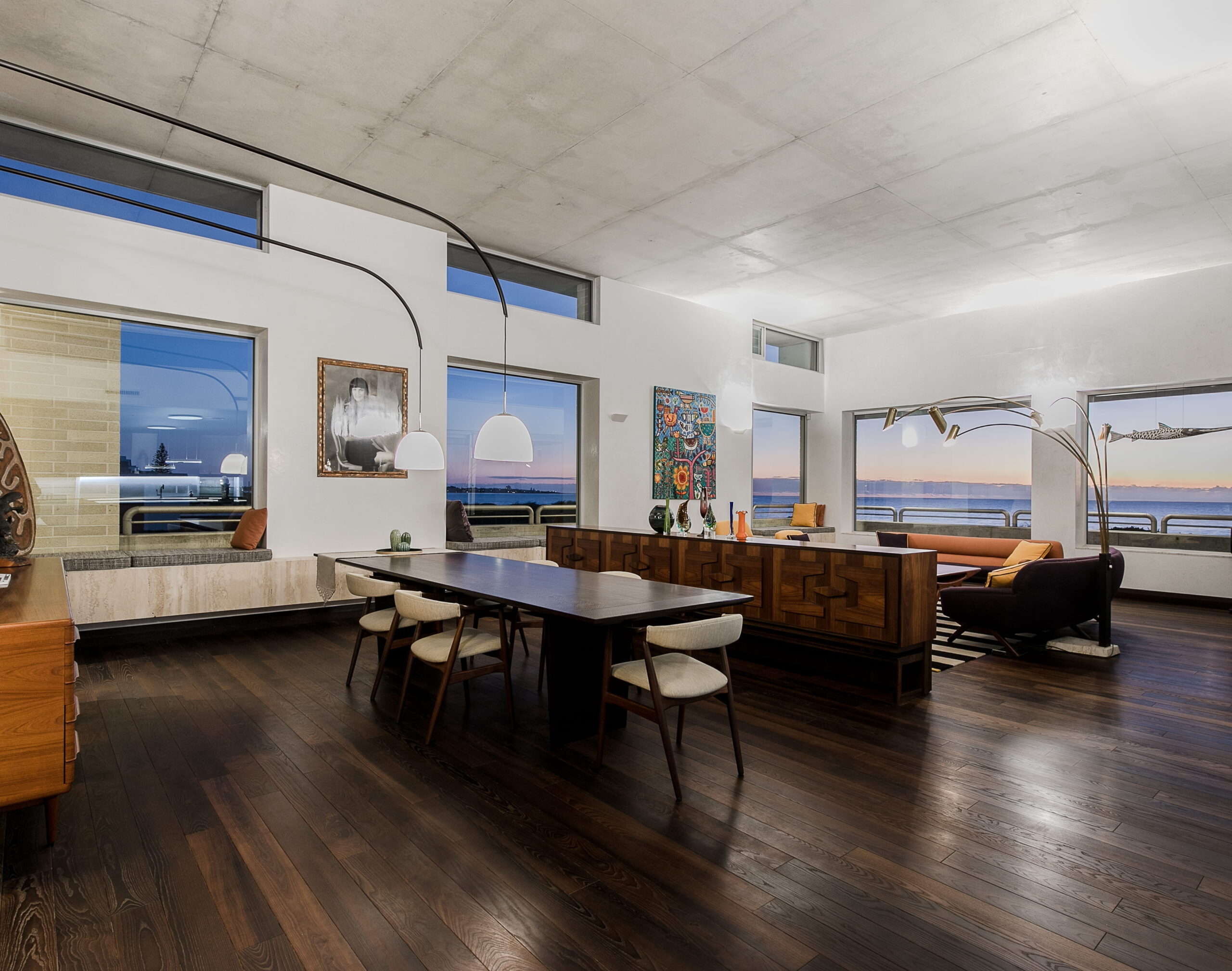
If you’ve read any general advice on home orientation in Australia, you’ll know the golden rule: orient your main living areas to face north. At Mandurah’s latitude of 32 degrees south, the winter sun sits low at around 34.5 degrees above the horizon at midday, which is perfect for flooding north-facing rooms with warmth through properly sized windows. In summer, it climbs to roughly 81.5 degrees, nearly overhead, so standard eaves of 450 to 600mm shade those same windows without blocking the view. The Australian Government’s YourHome guide recommends orienting living areas within 15 degrees west and 20 degrees east of true north, and at this latitude, the maths works beautifully.
The Fremantle Doctor adds another layer to the design equation. A floor plan that positions openings on the southwest to capture the afternoon sea breeze, with corresponding openings on the northeast to let warm air escape, creates cross-ventilation strong enough to replace air conditioning on all but the most extreme days. Alfresco areas positioned to the south or southwest of the main living zone become natural wind corridors, cooling the air before it enters the home. For more on how orientation decisions shape your entire floor plan, this guide to choosing the right home floor plan layout covers the topic in detail.
The canal block problem
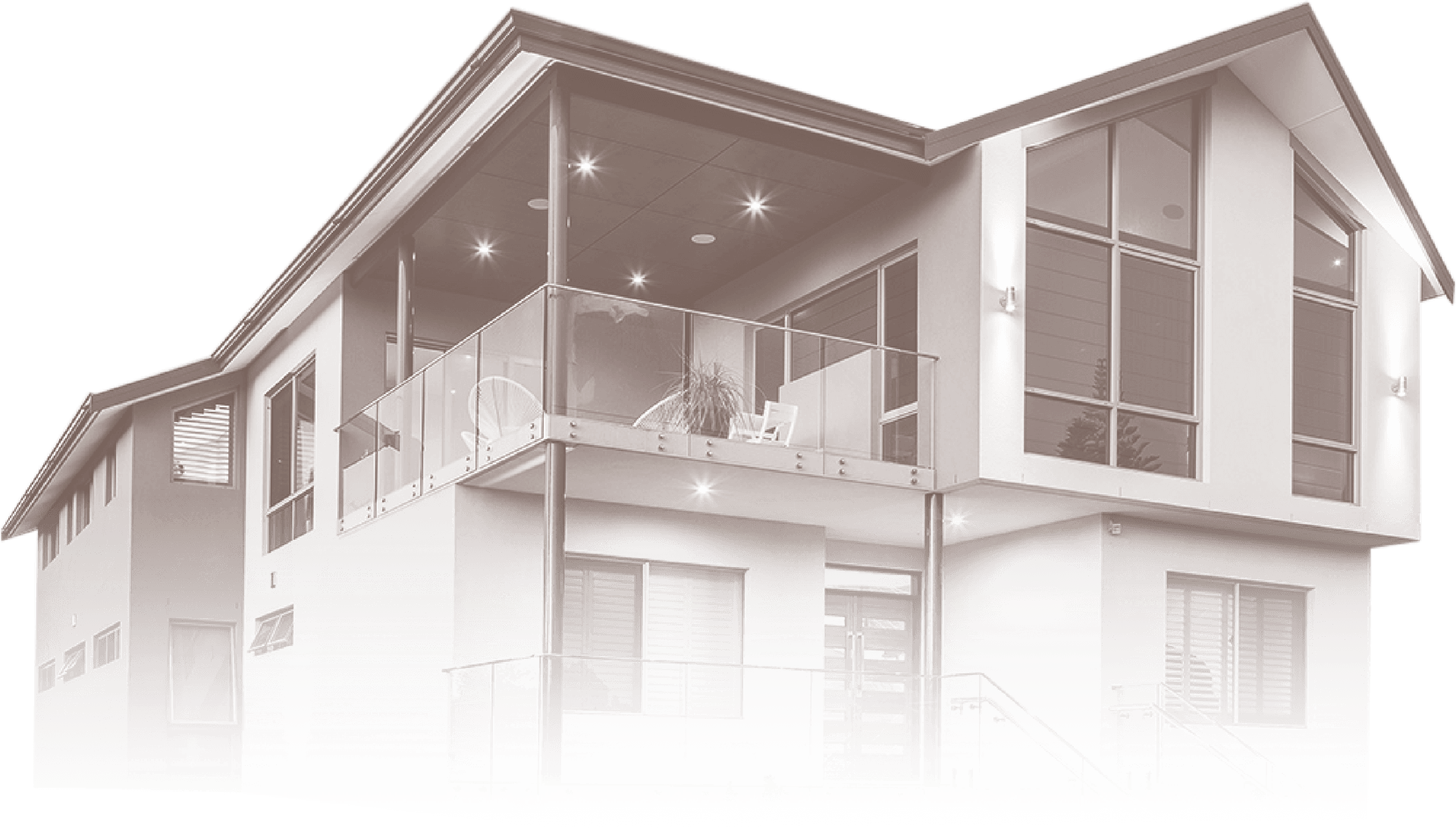
Many of Mandurah’s most prestigious waterfront blocks face their canal views to the west. Sunset views. Beautiful. Also the direction of the most punishing afternoon heat from November through March. If you fill the western elevation with floor-to-ceiling glass to capture those views, you’ll cook the living room.
Experienced coastal designers solve this with strategies that a template floor plan simply can’t anticipate: clerestory windows pulling northern light from above while living areas face the water; articulated floor plans that address both north sun and west views at once; or dedicated sunset rooms and alfresco zones oriented specifically for evening use, kept separate from the main living area. You can see how these challenges play out in completed waterfront builds like Cormorant Key and Seawind Drive.
What coastal living feels like inside
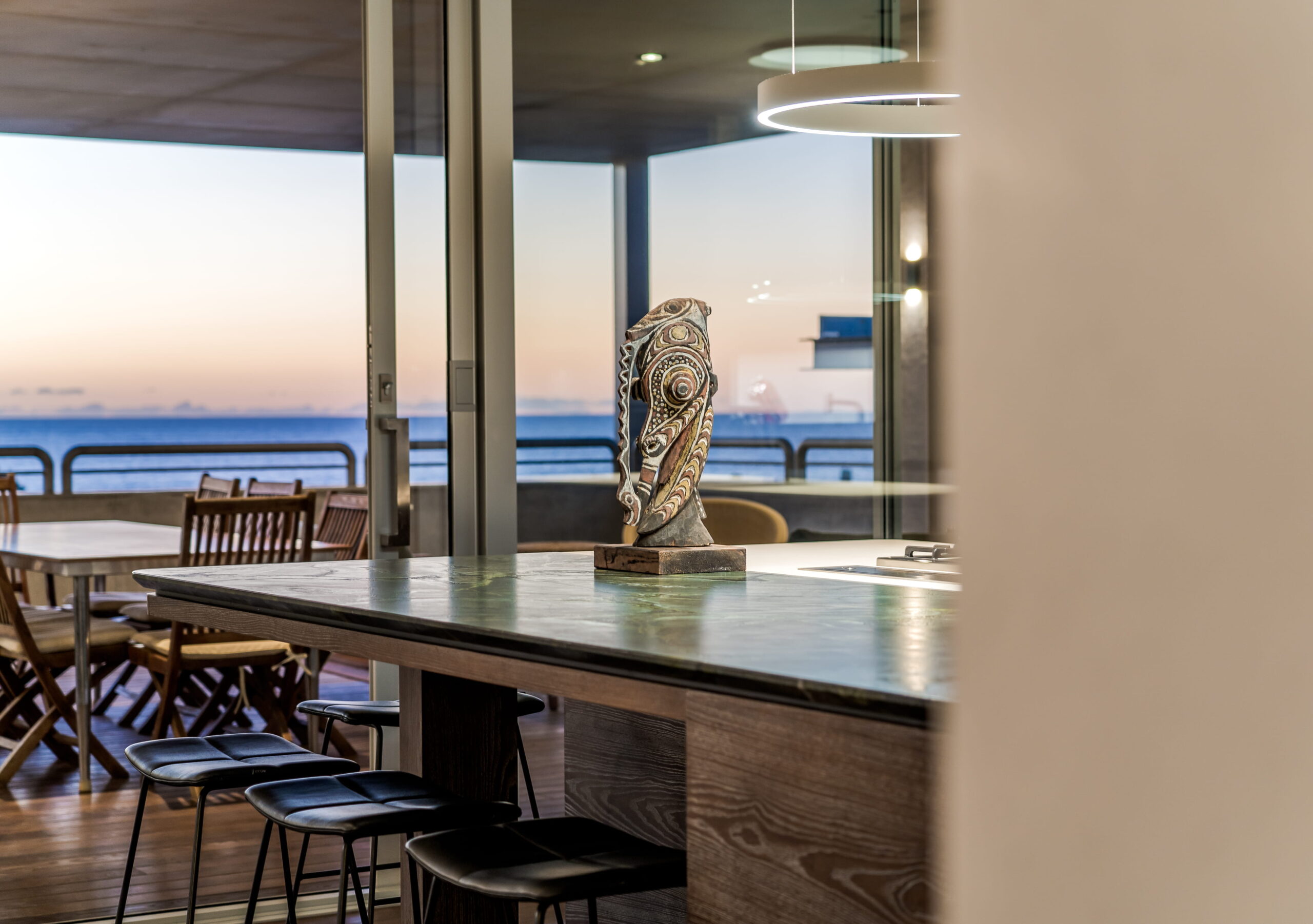
Getting the outside right is half the job. The interior of a coastal home has to manage humidity, noise, and light with the same level of thought.
Salt air carries moisture, and without proper management that moisture breeds mould, damages timber finishes, and creates a muggy atmosphere that air conditioning alone won’t fix. The target for indoor relative humidity is 30 to 50 per cent, which in coastal Mandurah demands thoughtful HVAC design. Ducted systems with integrated dehumidification, paired with the passive cross-ventilation approach described above, handle this well.
Smart home systems add a practical edge here. Environmental sensors monitoring humidity, temperature, and wind conditions can trigger automated responses: closing motorised windows when a storm front rolls through, deploying external blinds before the afternoon sun hits, or kicking dehumidification cycles into gear before you’ve noticed the air feels heavy. For homes designed to integrate smart home technology from the ground up, this kind of responsiveness becomes background intelligence rather than something you have to think about.
Then there’s wind noise, the invisible downside of building in coastal environments. The persistent hum of strong breezes and the occasional roar of winter storms can genuinely disrupt sleep and daily comfort if the home isn’t designed to manage it. Standard double-glazed windows only achieve an Rw 32 to 34 acoustic rating, which is marginal for coastal conditions. Upgrading to asymmetric glass thicknesses with acoustic laminated interlayers pushes performance to Rw 41 or higher, and you’ll feel the difference the first night a southerly blows through.
Mineral wool insulation outperforms standard fibreglass for low-frequency noise absorption due to its higher density. Solid-core internal doors, not hollow ones, and dense cork or rubber composite underlayments beneath upper-storey flooring prevent sound transmission between levels. The current 2026 home design trends are pushing acoustic comfort further into the luxury conversation, and for good reason.
Costs, responsibilities, and why people build here anyway
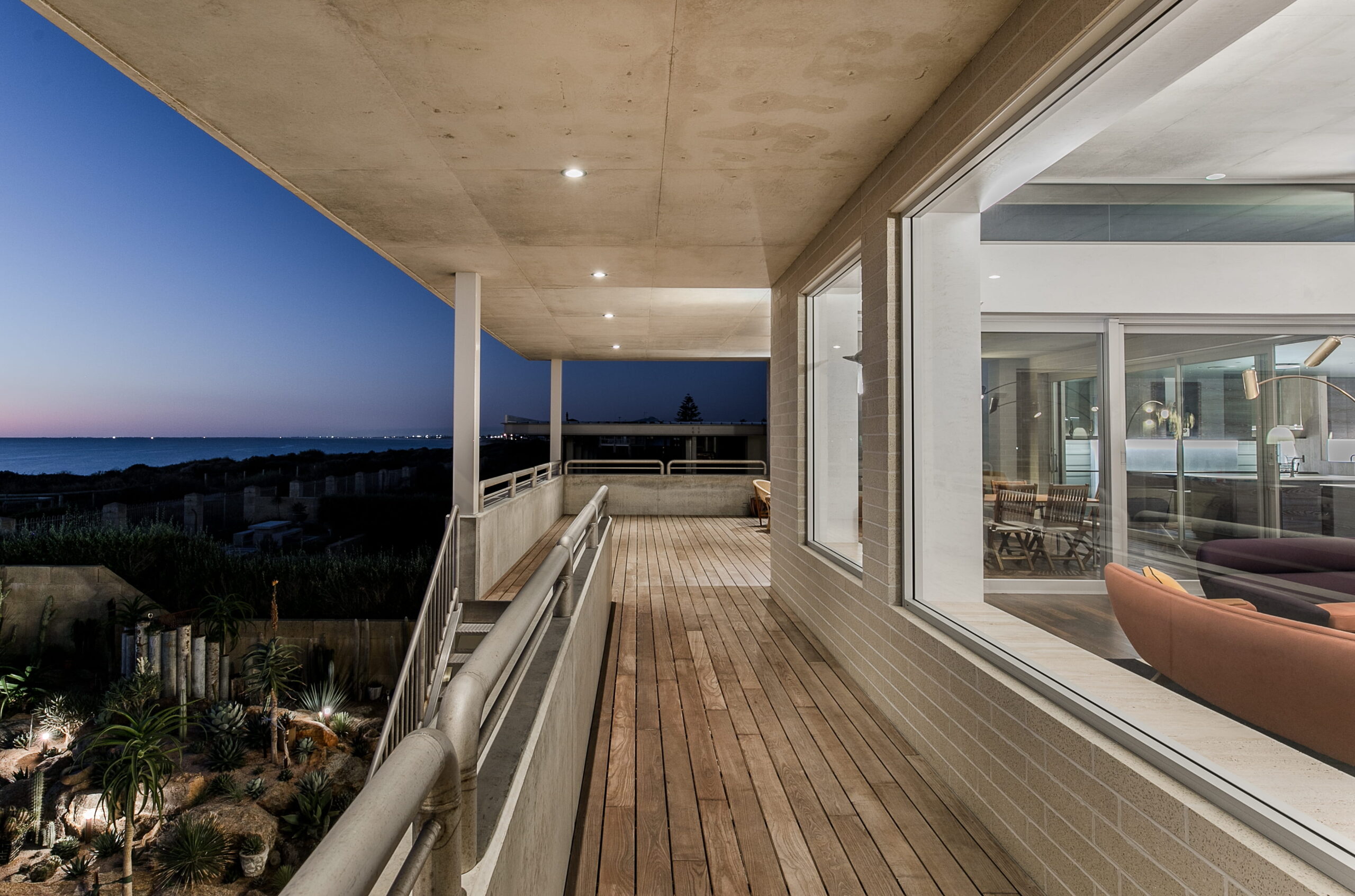
Building a coastal home costs more than the same build placed inland. Marine-grade materials carry a premium. Foundation engineering on canal blocks adds to the contract. The six-monthly fresh-water wash-down of all exterior surfaces, which is mandatory to maintain material warranties and prevent salt damage, becomes a permanent line item in your household budget. Any exposed natural timber needs annual sanding and resealing.
Canal properties carry specific legal responsibilities on top of this. Under the City of Mandurah’s Canal Waterways Management Policy, the structural maintenance and eventual replacement of your canal revetment wall is entirely your financial obligation, not the council’s. A Specified Area Rate funds broader waterway management including dredging and water quality monitoring, but the retaining structures on your lot boundary belong to you. If you’re considering a canal block, factor this into the long-term financial picture from the start.
The Northern Beaches CHRMAP, adopted in July 2023, and the Southern Beaches CHRMAP currently being finalised, both model shoreline movement and flood risk over 100-year timeframes. These plans inform the setback requirements under State Planning Policy 2.6 that determine where on your lot you’re actually permitted to build. Your builder and town planner need to review this data during the design phase. For an overview of how these regulatory layers fit together, see this guide to the building approval process in WA.
So why do people still choose to build here? Because the daily reality of living on the water is hard to replicate anywhere else. The morning light shifting across the estuary. The Fremantle Doctor rolling into your alfresco at 2pm on a February afternoon. Stepping off your back deck onto a private jetty. The Mandurah coastal property market has delivered strong annual growth through 2025 and into 2026, with waterfront and canal-front homes commanding significant premiums over non-waterfront equivalents, and the scarcity of direct coastal frontage means that premium is unlikely to narrow.
The additional investment in building a coastal home to the correct specification isn’t a cost you absorb and forget about. It’s what protects the asset, the lifestyle, and the comfort you built it all for.
How Makin Homes approaches coastal builds
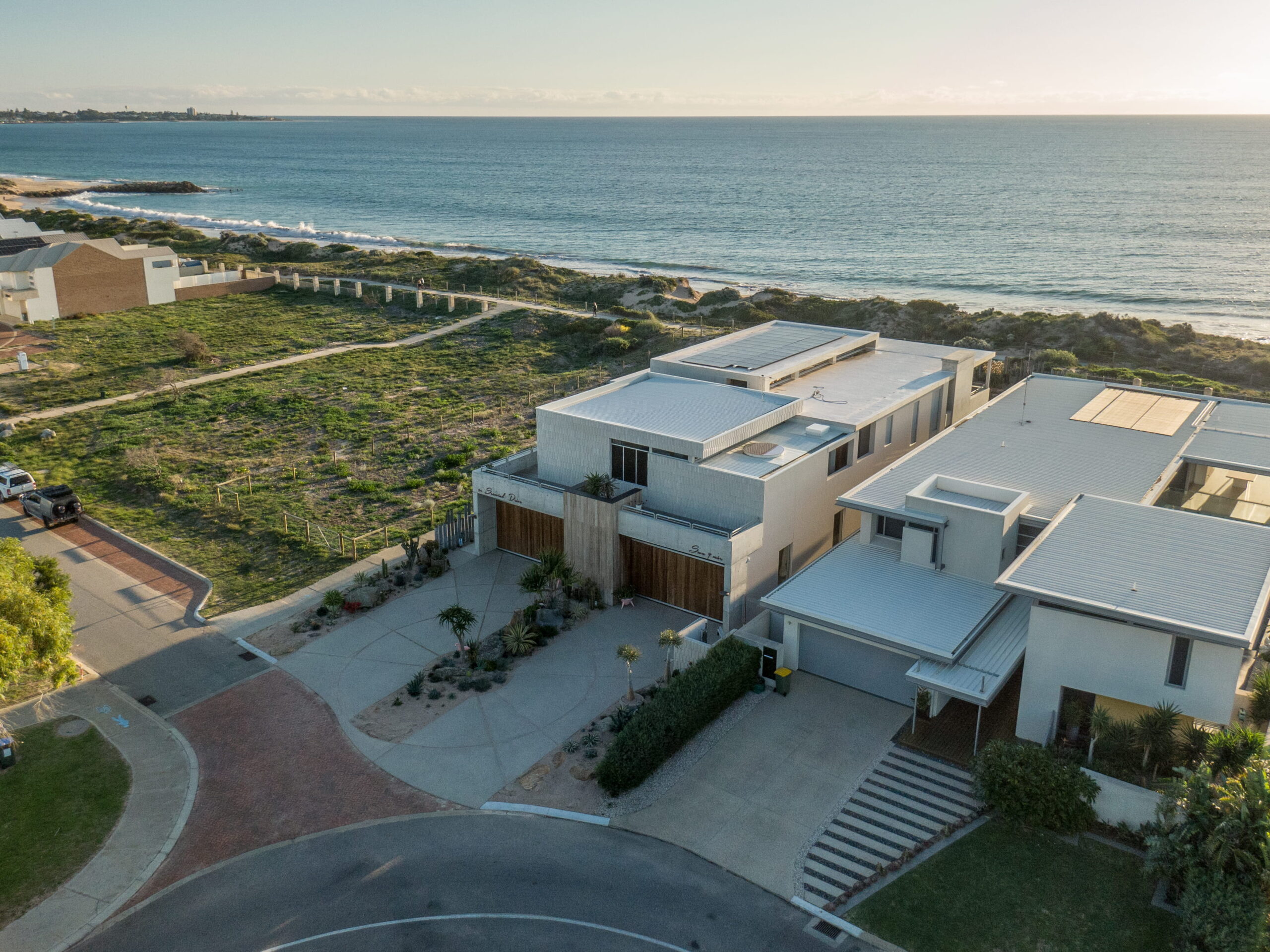
At Makin Homes, we deliberately build a maximum of 10 homes per year. On the coast, that limit matters more than it does anywhere else, because building in coastal environments leaves zero room for shortcuts or split attention.
Our eight-step design process starts with understanding both how you live and the specific conditions of your site. For a canal block in Port Mandurah, that means analysing orientation, water table depth, wind exposure, council setback requirements, and the tension between views and solar performance before a single line gets drawn. Every material specification gets tailored to the site’s exposure classification under the relevant Australian Standards, not pulled from a generic schedule.
We also know the regulatory landscape inside out. Canal homes almost always require planning approval under the City of Mandurah’s Local Planning Policy 4, and the approval process can extend timelines substantially if it’s not managed by a builder with local experience. Our use of the Certified building permit pathway keeps pre-construction moving as efficiently as the system allows. For a realistic picture of what the full timeline looks like from first consultation through to handover, this guide to how long it takes to build a home in WA breaks it down stage by stage.
If you’re considering building a coastal home in Mandurah or the surrounding Peel Region, book a consultation to talk through your site, your vision, and how to bring them together.
Frequently asked questions
Do I need different materials near a canal versus the open ocean?
Yes, though the thresholds differ. Homes within 100 metres of calm waterways, including canals, require the same M4 mortar and grade 316 stainless steel wall ties as homes within one kilometre of surf. Roofing and cladding specifications are slightly less demanding near calm water than near surf, but still well above standard inland requirements. Your builder’s material schedule should reflect your specific site’s exposure classification under AS 3700, not a generic coastal checklist.
What is a CHRMAP, and does it affect where I can build?
A Coastal Hazard Risk Management and Adaptation Plan models shoreline movement and flood risk over a 100-year planning horizon. Mandurah adopted its Northern Beaches CHRMAP in July 2023 and is currently finalising its Southern Beaches version. These plans inform the setback requirements under State Planning Policy 2.6, which can dictate where on your lot the building envelope sits. Your builder and town planner should review the relevant CHRMAP data early in the design phase.
How much more expensive is building on the coast?
There’s no single figure because it depends on proximity to water, soil conditions, and design complexity. The premium for marine-grade materials, enhanced foundation engineering, and coastal-rated glazing adds meaningfully to the base build cost compared to an identical footprint placed inland. On top of that, the ongoing maintenance regime (six-monthly exterior wash-downs, annual timber care) is a long-term commitment. For canal properties, revetment wall obligations and Specified Area Rates apply as well.
Can I capture canal views without overheating in summer?
Yes, but it takes deliberate design rather than a stock floor plan. The most effective strategies include clerestory windows bringing northern light from above while living areas face the water, deep verandas of three to four metres on western elevations, high-performance glazing with low solar heat gain coefficients, automated external louvre blinds, and angled floor plans that let you address both north sun and west views without fully exposing the living zone to afternoon heat.
Is a coastal Mandurah home still a good investment?
Mandurah’s coastal suburbs have delivered strong capital growth through 2025 and 2026, with waterfront properties outperforming broader market averages. The scarcity of direct coastal and canal frontage, combined with ongoing population growth in the Peel Region, supports continued demand. A well-built coastal home, one where the material specification and maintenance regime match the environment, holds its structural and aesthetic value far longer than a home built to minimum spec. The common building mistakes that erode value tend to cluster around cutting corners on exactly these kinds of decisions.